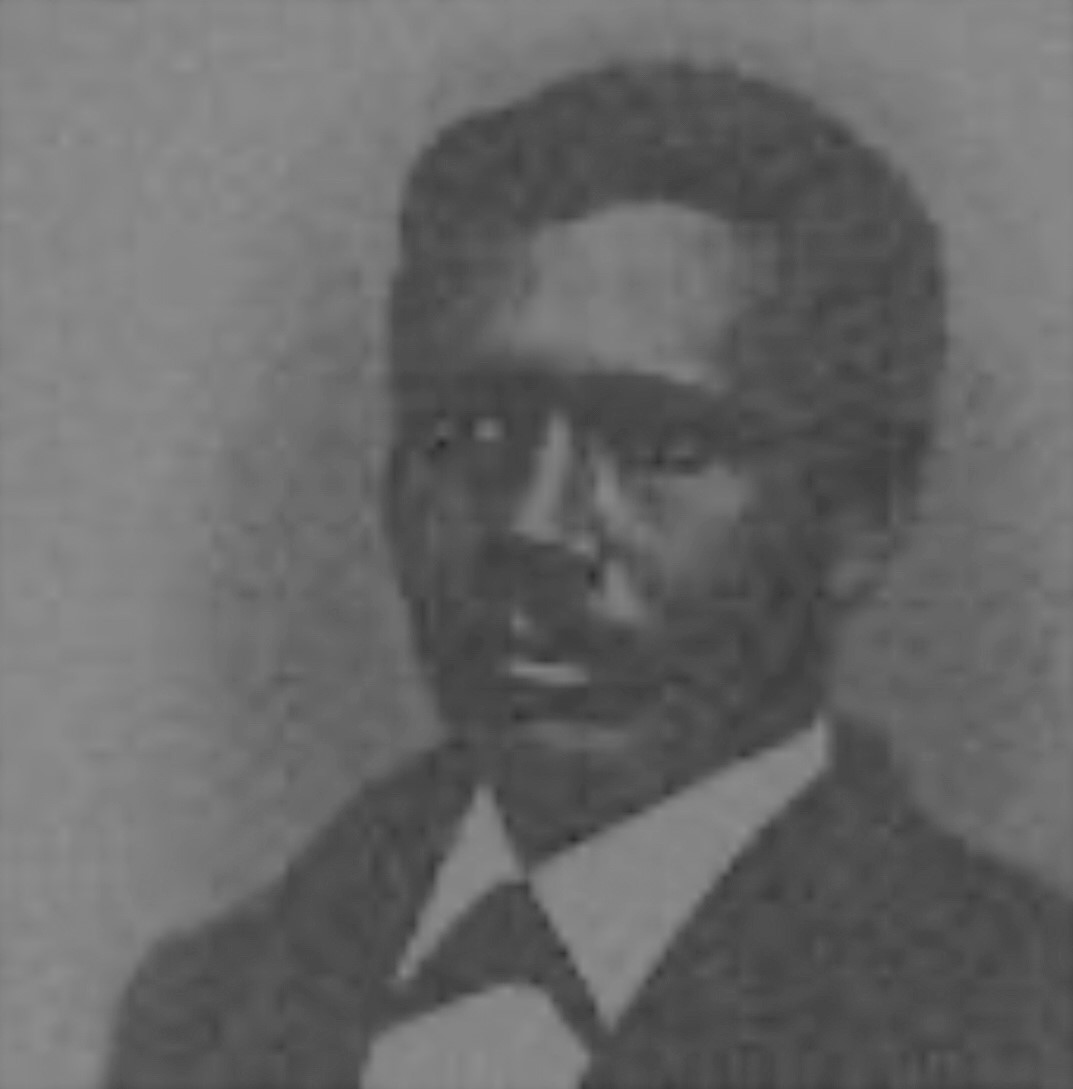
Many years ago, when I first started my research in Randolph County, North Carolina of my mother’s family and the community they came from, I was discussing Islay Walden and his origins with one of the librarians in the Randolph Room at the Randolph County Regional Library. She told me family members believed his father was William D. Walden, a free person of color, whose family also lived in the southern part of Randolph County. She opined that since Islay had been enslaved before emancipation to Gar[d]ners (and Smithermans), it would make sense that after emancipation he would take the surname of his birth father, Walden. Seemed logical.
The family member who had supplied this information was Evie Ruth (Hill) Grady (1925-1998), who descended from Islay’s sister, Sarah (Callicut) Hill. Evie lived in Cincinnati where her great grandparents had moved after they left Randolph County, North Carolina, in the 1890s. I really didn’t research the story in those days (1980s-90s) because I was researching more direct ancestors of my own. Around 2012-13, I began researching Islay Walden and the church and school he began in my ancestors’ community, known today as Strieby Congregational United Church of Christ.

References were found in the American Missionary Magazine, a journal of the American Missionary Association, which was the missionary organization associated with the Congregational Church. It chronicled a number of activities of Islay Walden. However, what caught my attention was his death notice in February 1884. It named his parents as, “Ruth and Branson (Garner) Walden.”[1] Well, Garner was the name of his enslaver when he was born. We knew his mother was Ruth, but who was Branson?
I found two more records that provided additional clues. Neither pointed to William D. William as Islay’s father. The first was a marriage license for a marriage to a Amelia Frances Harriss in Raleigh, NC, that no one had referenced anywhere that I knew. His known wife was Eleanora/Elinora (Farmer) Walden, whom he had met when he was attending the New Brunswick Theological Seminary in New Jersey. So, who was Amelia Frances? Well, that’s a story for another day, but the names of his parents as recorded on his marriage license were Branson and Rutha Walden.[2] Once again, not William.

The second was a newspaper interview that appeared in the New York Evening Post the day after he was ordained. The interviewer had asked about his father. He did not name his father but said that his father, who was enslaved, had run away to the Midwest, using false papers.[3] William was still living in Randolph County. A landowner, William had no reason to “run away.” He died in Chatham County, NC, about 1869 and is said to be buried in the William D. Walden Cemetery, in Randolph County, North Carolina.[4]

That Islay was a Walden was not in dispute. After his death, his “cousin,” Henry Ruffin Walden, took over the teaching duties of the school at Strieby. Henry’s father was named Anderson Walden. Their family lived in neighboring Chatham and Moore County. Anderson had died there,[5] but his widow, Julia, and some of their children, including Henry Ruffin had moved to Strieby in the early 1880s. Some stayed in Strieby and were buried in the cemetery there, while others moved up to the town of Asheboro, about 13 miles away.

I had speculated on the exact relationship of Henry and Islay’s fathers in other writings. I reasoned that the William being referenced was not William D, who was contemporary to Anderson and very likely Branson, but an older William, who was not Islay’s father, but Branson’s father. That’s where things stood when I published a biography of Islay Walden in 2021, that included a suggested genealogy in the Appendix.[6]

Recently, Family Search has released a beta program that allows one to do full text searches of unindexed records. I searched on the various names, Islay Walden, Branson Walden, and then Anderson Walden. Bingo. A record popped up of an application to the Eastern Cherokee Claims Commission by Henry Ruffin Walden’s sister. It is irrelevant whether her claim was granted or not, because from a genealogical perspective what matters is the application. Applicants have to give genealogical information in order to try to prove their claim.
Henry’s sister, Margaret (Walden) Lilly, applied in 1906. She was required to name her family: her parents, her siblings, her spouse, her children, and her grandparents and all their children. Predictably, she named her parents as Anderson and Julia Walden (although she listed a different maiden name than the one everyone in her current family members believed). She named all her siblings, her spouse (James Lilly), and her children. Then she named her grandparents. She said her grandfather’s name was John Walden, not William, and her grandmother’s name was Rhoda Garner. [7]

While there is still research needed to confirm which “John” she is referencing (yes there’s more than one candidate), this document went on to answer the question about how Islay, his sister, and Henry, Margaret, and their siblings were related. Margaret stated that John and Rhoda’s children were Anderson, Branson, and Tima who married Brantly Strickland (I had speculated that she was their sister in my own analysis).[8] Thus, Margaret’s information confirmed that she, Henry, their siblings, and Islay, and his sister Sarah, were indeed first cousins.
[1] National Council of the Congregational Churches of the United States (National Council). (1885). The Congregational Year-book (Boston: MA: The Congregational Publishing Society), Volume 7, 37. Retrieved from: 1885 Congregational Year-book
[2] Ancestry.com. North Carolina, U.S., Marriage Records, 1741-2011 [database on-line]. Alfred I. Walden and Amelia Frances Harriss, 17 October 18867, Raleigh, North Carolina. Provo, UT, USA: Ancestry.com Operations, Inc., 2015. Retrieved from: Ancestry.com
[3] An Interesting Ordination. (2 July 1879). Evening Post (New York), n. p.(See also: Margo Lee Williams, From Hill Town to Strieby: Education and the American Missionary Association in the Uwharrie “Back Country” of Randolph County, North Carolina, Crofton, KY: Backintyme Publishing, 2016, 73-74).
[4] Find A Grave Memorial 142492481. William D. “Billy” Walden. Williams D. Walden Cemetery, Cheeks, Randolph County, North Carolina. Retrieved from Findagrave.
[5] National Archives and Records Administration (NARA); Washington, D.C.; Non-population Census Schedules for North Carolina, 1850-1880: Mortality and Manufacturing; Archive Collection: M1805; Archive Roll Number: 3; Census Year: 1869; Census Place: Ritters, Moore, North Carolina; Anderson Walden, October 1869, Page: 496. Retrieved from: Ancestry.com.
[6] Margo Lee Williams. (2021). Born Missionary: The Islay Walden Story (Silver Spring, MD: Margo Lee Williams & Personal Prologue). Appendix.
[7] “United States records,” images, FamilySearch, image 344 of 1378; Margaret Lilly in the Eastern Cherokee Applications of the U.S. Court of Claims. Retrieved from: https://www.familysearch.org/ark:/61903/3:1:3QS7-99WX-42LK?view=fullText
[8] “United States records,” images, FamilySearch, image 344 of 1378; Margaret Lilly in the Eastern Cherokee Applications of the U.S. Court of Claims. Retrieved from: https://www.familysearch.org/ark:/61903/3:1:3QS7-99WX-42LK?view=fullText


