Posted on — 1 Comment

Welcome Home, Private Owen Mathias Norris

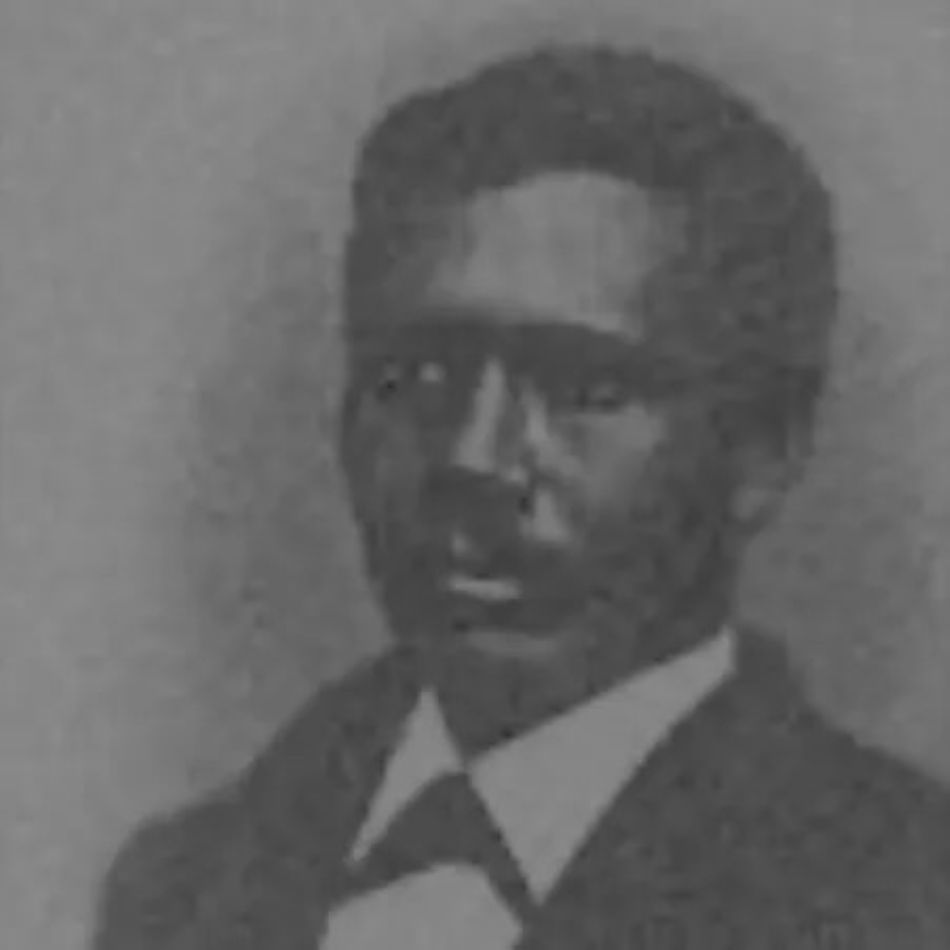
Black and white portrait of PFC Owen Norris wearing a shirt and tie, with writing  showin date of death amd message to his sister Helen.
PFC Owen Mathias Norris, 1918-1944
(Photo courtesy of Michelle T. Delk)

On 24 September 2026, Private Owen M. Norris finally came home. He was laid to rest near his parents and other family members on 26 September – 82 years after he died in an explosion at Pearl Harbor. Owen was born, 1 January 1918, in Marriottsville, Howard County, Maryland. He was the son of Myrtle G. (Howard) and Samuel Emory Thomas Norris.

Picture of Robert Arthur Williams in a naval uniform with a hat, smiling for the camera. The uniform features a white collar and the cap has 'USN' written on it.
Robert Arthur Williams, 1925-2003
(Photo Courtesy of Michelle T. Delk)

Owen was my brother Robert’s brother-in-law; the brother of Gladys Norris, my brother’s first wife. However, they never met. In 1944, my brother, Robert, was in the Navy. Although I know that he spent some time in the Pacific theatre during the war, I have no knowledge of whether he was ever stationed at, or stopped at, Pearl Harbor. In any event, Robert did not meet Owen’s sister Gladys until after the war, and they did not marry until 1948.

Black and white portrait of a smiling Gladys Fortina Norris with short, curly hair, wearing a collared shirt, looking to the side.
Gladys Fortina Norris, 1930-1968
(Photo courtesy of Michelle T. Delk)

Owen was drafted on 16 October 1940 and enlisted on 11 March 1941. By 1944, he was assigned to the 29th Chemical Decontamination Company. He was stationed on Oahu (Hawai’i) and was assigned to Pearl Harbor. On 21 May, tragedy struck.

Detailed Draft registration card for Owen Mathias Norris, including personal information such as address, telephone number, age, date of birth, citizenship, and naming his mother, Mrs. Myrtle Norris.
Owen Mathias Norris’s Draft Card (Ancestry.com)

Pearl Harbor Naval Base was divided into three districts, East, Middle, and West Lochs. The West Loch was the one area that was not attacked in December 1941. It harbored Navy and civilian vessels, as well as large stores of ammunition and fuel. On the afternoon of the 21st, there were a large number of ships, including over 29 LSTs, preparing to attack Saipan, in the Marshall Islands, on 15 June, to take back control from Japan. Most of the LSTs were loaded with ammunition and gasoline storage tanks, floating vehicle garages, ship repair yards, and personnel quarters. It is believed that LST 353 spontaneously combusts. There was shrapnel and gasoline fires igniting other fires everywhere. Three minutes later there was another explosion followed by a third explosion.

A close-up image of a memorial plaque listing the names and ranks of military personnel, killed in the West Loch explosion, Pearl Harbor, including details such as their squadron and state affiliations.
Memorial Wall at Memorial Cemetery of the Pacific, Honolulu
(US Findagrave page for PFC Owen Norris)

The official death toll was 163 with another 396 wounded. Owen was among the dead. According to a hospital record summarized on Ancestry, he died in hospital. He was 26 years old. However, it is likely they identified him from his dog tags and that his body was not recognizable or identifiable, hence his remains were buried as unknown, and memorialized at the National Memorial Cemetery of the Pacific, affectionately known as “Punchbowl,” due to its physical location is an extinct volcano crater. Subsequently, his possessions were gathered and returned to his mother.

Fast forward 80 years, and we now have DNA testing. The Defense POW/MIA Accounting Agency located at what is now known as Joint Base Pearl Harbor-Hickam is charged with identifying the remains of unknown/missing military personnel killed on active duty. It has one of the largest forensic anthropological laboratories in the world. in November 2025, with the impetus of grand-nieces CN and MT and the help of local, Hawaii-based, genealogist Deloris Guttman, the Agency disinterred remains believed to be Owen’s, and using dental, anthropological, isotope, and DNA provided by one of his grand-nieces, they were able to confidently identify his remains in July 2026. With that, the government prepared to make the “Dignified Transfer,” of his remains to the family in Maryland.  

A military honor guard carrying a casket draped in the American flag on the  BWI Thurgood Marshall Airport tarmac, with service members and flags in the background , part of the Dignified Transfer of PFC Owen Norris.
Dignified Transfer of PFC Owen Norris, BWI Thurgood Marshall Airport
(Photo courtesy of Michelle T. Delk)

On Saturday, 26 September, for one last time, family members, friends, and an Army honor guard, gathered at the family’s historic church and cemetery, West Liberty United Methodist Church, in Marriottsville, Howard County, for a simple but beautiful graveside service and presentation of the flag to his oldest living niece, ADB.

A military officer saluting in front of the wooden coffin of PFC Owen Norris after presenting the flag to the family seated on chairs, at a graveside service, with a blue drape and flowers nearby.
Presentation of Flag to the family of PFC Owen Norris, West Liberty UMC Church
(Photo courtesy of Michelle T. Norris)

It does not escape me that the Maryland that Private Norris left in 1941, is not the Maryland to which he has been returned. He left a segregated state, where he could not attend school with white children, or sit in the same sections of movie theaters with white people, and the town where I live was a “Sundown” town, which would have required him, or any Black person, to vacate the downtown, business areas by sundown, or risk being arrested – or worse. He left a Maryland where Thurgood Marshall (for whom the airport where he was welcomed home was named), had been denied entrance to the University of Maryland’s Law School, because they did not admit Black students.  He returned home to a state where the Governor is a Black man. Private Owen Norris died while trying to guarantee that the world would be a safe and better place than the one in which he grew up. Although it is not by any means a perfect world, it is a better world. Mission accomplished.

Welcome Home, Private Norris. Welcome Home.  

Image showing the Bronze Star Medal on the left, featuring a gold star with a red and blue ribbon, and the Purple Heart Medal on the right, depicting George Washington's profile with a purple heart-shaped emblem and a ribbon.
Bronze Star and Purple Heart Medals

Private Norris was postumously awarded the Bronze Star and Purple Heart for his service to a grateful nation.
Posted on — Leave a comment

A Reflection on Juneteenth, Education, and Faith

Many know, and others are learning, that Juneteenth started as a holiday primarily in Texas, because it commemorated the day that enslaved Texans learned that they were emancipated, freed from the yoke of bondage. Over the years it has been celebrated with parades, special foods, picnics, barbecues, much the way July 4th is celebrated.

It was celebrated that way because the African American community in Texas saw it as the day that their freedom was finally supported and protected, rather than July 4th, when they or their ancestors were still enslaved, and as Frederick Douglass commented, “What to the slave is July 4th?” It is celebrated now by most African Americans, including in Randolph County, North Carolina, as exactly that, an African American “July 4th,” finally recognized as a federal holiday. Even though it was the ratification of 13th Amendment in December 1865 that finally, constitutionally, ended slavery, the celebration of June 19th, Juneteenth, continues as a day of remembrance and celebration.

A historic wooden church building with a steeple and cross, surrounded by trees, featuring people standing in front.
Original Strieby Church Building, Randolph County, North Carolina

Today, we continue to celebrate that date as a day of liberation, a day of freedom. What I’ve come to realize is that it was not just a day of freedom from slavery, but the beginning of freedom to do things that were previously forbidden – get an education and gather to worship unencumbered.   

Reconstruction, the 20-30 years after the Civil War ending in the Jim Crow period, was marked by the establishment of independent Sabbath Schools and the Schools of the Freedmen’s Bureau. In fact, there was a Freedmen’s school, run by Aaron O. Hill, Jr., that served the communities we now know as Strieby and Lassiter Mill, in southwestern Randolph County, North Carolina. It was short-lived. The local Quakers also ran a school, but it was not a free school. A successful school, run by an African American was not established in that area until the Rev. Islay Walden returned to Randolph County with the help of the American Missionary Association (AMA), having earned his teaching degree from Howard University and his divinity degree from the New Brunswick Theological Seminary.  As he had done in Washington, DC, where he established a successful Sabbath School, and in New Jersey, where he established an even more successful “Students’ Mission,” he started two schools in Randolph County with the help of the AMA. One was the school that became known as Strieby and the other, eight miles away, was Salem School. Both would endure well into the 20th century. Both would give birth to many teachers and education assistants in later generations.

Historic check receipt dated December 12, 1866, issued to Dr. H.C. Vogell for eight dollars as rent for a building used for a Freedmen's school.
Uharie District School Receipt signed by A. O. Hill

Reconstruction was also marked by the freedom to establish places of worship, because their enslavers monitored heavily or did not permit their enslaved to gather, even for worship, for fear of “rebellion.” This was especially true after the Nat Turner “Rebellion.” One cannot escape the symbolism of that first Juneteenth celebration, where hundreds of formerly enslaved marched to Reedy Chapel AME Church as one of their first acts in freedom.

Front view of a historic church with a pointed roof and cross, surrounded by a palm tree and other buildings.
Reedy Chapel AME Church, Galveston, Texas; Retrieved from Galveston.com

During Reconstruction every community sought to establish their own center of worship, in order to exercise their first amendment right of freedom of religion. Again, the Rev. Islay Walden established two Congregational church communities, one called “Promised Land,” now called, “Strieby,” and the other known as Salem. Both were supported by the AMA. Both churches flourished well into the 20th century, but their congregations have waned as younger generations have sought higher education and careers in other places around the country. Neither has an active worshipping community today.

Exterior view of a white church building with a small steeple, featuring a porch and sign indicating the church's name.
Salem Congregational United Church of Christ, Randolph County, North Carolina

Strieby continues to have one service a year on Homecoming Sunday in August but is otherwise a cultural heritage site where the grounds are open to the public, although the church building is only open by appointment. Rev. Walden’s spiritual leadership has, nonetheless, borne fruit as descendants living around the country continue to maintain strong ties with faith communities wherever they live and many have become ordained ministers or lay leaders.

What this history has taught me is that Juneteenth does not just celebrate an historic event from a century ago, but encourages us to recommit ourselves to those values, education and spiritual growth, that the newly emancipated understood would provide the fertile soil to grow and flourish in freedom and the tools to guard that freedom.