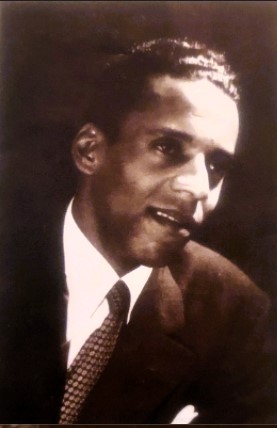
Kendrick, “Kenny,” was my stepfather. He and his wife and family lived in the community where I grew up in New York, East Elmhurst, an African American middle class/professional enclave in North Queens, near LaGuardia Airport. He and my father were good friends. When my father was sick in his last years, Kenny came every day to spend time with him. In fact, Kenny brought us the news that my father had passed away in the hospital. Six years after his wife had passed away, he and my mother married. They were married for 25 years when he died in 2010.
I knew that Kenny had served in the military during World War II. Like most veterans, he didn’t really talk about it. I knew a few things. I knew he had been in the Pacific theater and contracted what seemed to be relapsing malaria, from which he suffered, with periodic fever episodes for the rest of his life.
I also knew he had been stationed in Alaska because when he developed Alzheimer’s, he would often look out the kitchen window and talk about the barracks being built in the distance. However, it was only after he died when I was going through his papers and found his DD214, his military discharge papers, that I learned he had been in both the European Theater and the Pacific Theater. I was shocked. I had no idea.
Kendrick Madison’s DD214
The Early Years
Kenny was born 25 June 1919, in New York,[1] the son of Josephine Madison and an unknown father reportedly from Ohio, according to the 1930 census. Josephine died in 1939, and Ken went on to live with his grandmother, Isabelle Madison and an aunt, Hattie Jones.
On 16 October 1942, Kenny registered with the draft.[2] His draft record indicated he was working for William E. Fountaine. His DD214 noted that he was a switchboard operator at the time. However, the enlistment which was found online and his DD214 both say that he enlisted on 20 October 1941. I suspect the draft card date was erroneously recorded. Thus, it would seem he was inducted just four days after he registered for the draft. This record indicated he was working with automobile repair, which foretells his career working with the NYC Transit Authority, repairing subway trains and tracks. He did his basic training at Camp Upton, in Yaphank, New York.[3]
Alaska Territory
According to his DD214, Kenny’s MOS was “Clk Gen 055.” On 5 June 1942, he was sent to the Alaska Territory, arriving on 10 June. Kenny was part of the 388th Engineer Battalion. I decided to look up information on the unit. I was surprised to learn that Congress passed a resolution honoring his unit and three other Black units for their contributions in building the ALCAN (Alaska-Canada) Highway, in record time.[4] The highway would be pivotal to the support of troops fighting on the Pacific front. In searching further, I learned that while these men were building barracks along the route (undoubtedly the barracks Kenny was “seeing” at the kitchen table), they were never allowed to sleep in them, even in -60F degree temperatures. The barracks were for White soldiers. Black soldiers slept in TENTS! Kenny never mentioned any of that. On 21 September 1943 he returned to the United States, arriving on 24 September.
Headed to Europe
In December 1943, Kenny received his Marksman’s badge on an M1 rifle. Involvement in the War was now imminent. One tell-tale sign was his vaccination record. He had received a tetanus shot in September, no surprise there, but in December he received a Typhoid shot, something that would be in preparation for travel overseas, including Europe. In January, he received a smallpox vaccination, also indicative of overseas travel. A US Smallpox epidemic didn’t occur until 1947.
Deployment came in March. Kenny left for the European Theater on 24 March 1944, arriving on 3 April. I have no information at this time about his activities when first arriving in Europe, exactly where he was stationed, for instance, though most likely somewhere in England. What I do know from his DD214 is that he participated in the landing in Normandy. He stayed in Europe until 24 July 1945, when he was sent to the Pacific Theater. He arrived on 30 August. He finally left for the USA on 10 November 1945, arriving on 8 December.
A Grateful Nation’s Recognition
For his service he received the World War II Victory Medal, the American Defense Service Medal, the American Service Medal, the European-African-Middle Eastern Service Medal, the Asiatic Pacific Service Medal, and of course the Good Conduct Medal. His DD214 also indicates the highest rank he attained was Sergeant.
Kenny was discharged on 19 December 1945 at Ft. Dix, in New Jersey.
Kendrick H Madison’s Honorable Discharge
Family Life
After returning from Alaska in September 1943, Kenny married Catherine Richardson on 6 October 1943.[5] Catherine’s family was from St. Martin, but she was born and raised in New York. They had one son. Catherine died 15 September 1987.[6]
On 25 November 1988, Kenny married my mother, Margaret Lee Williams, in Bethesda, Maryland.[7] They continued to live in East Elmhurst, Queens, until his death on 10 April 2010.[8] He was buried at Calverton National Cemetery, on Long Island, New York.[9]
On this 80th Anniversary of D-Day, Thank you for your service.
References
[1] Kendrick H Madison. U.S., Department of Veterans Affairs BIRLS Death File, 1850-2010 [Database on-line]. Ancestry.com.
[2] Ancestry.com. U.S., World War II Draft Cards Young Men, 1940-1947 [database on-line]. Ancestry.com.
[3] Kendrick H Madison. U.S. World War II Army Enlistment Records, 1938-1946 [Database on-line]. Ancestry.com.
I am a family historian writing about my genealogy research and communities of color primarily in the Southeast, especially North Carolina, as those of you who followed my previous blog on backintyme.biz (Margo Lee Williams’s Blog – currently not available for viewing) or read my books (Miles Lassiter and From Hill Town to Strieby) know. I will be continuing to do the same here. In addition, I will post information about DNA and its place in genealogical research as well as other topics of historical and genealogical interest. So stay tuned!
Richard Jacobs Tombstone with Mosaic Templars of America (MTA) Symbol at top
Richard Jacobs was my great-grand uncle. He was born enslaved on 6 March 1841 (not 1874 as it says on his tombstone), in Barbour County, Alabama. He died 19 July 1923, in Sanford, Seminole County, Florida. He was the older brother of my great grandmother, Sallie Jacobs Farnell. There were five siblings: Richard; my great grandmother Sallie; her twin, Harriet Jacobs Lightfoot; their brother Green Jacobs; and the youngest, Joseph. Though born in Alabama, after the War was over, they were all found living in Florida. They were the children of William and Charlotte Jacobs, both of whom had been born in Virginia.
When my great uncle’s tombstone and information came up as a memory for this date in Ancestry. I decided to look at his Findagrave page because I knew that many of the tombstones in Page Jackson Cemetery, where he is buried have been cleaned, and I hoped to get a better, clean picture of the stone. Indeed, an updated picture of the cleaned headstone was on his page. I noted that at the top of his stone there was a symbol that seemed to be some sort of crest. I noticed that the inscription at the bottom had been highlighted: “Celery City Chamber 4149, Sanford, Fla.” I was unfamiliar with symbols, so a google lens search was in order. The results said that it was the insignia of the Mosaic Templars of America (MTA).
Mosaic Templars of America “MTA” symbol at top of the tombstone
According to the Encyclopedia of Arkansas, the MTA was an African American fraternal and mutual aid society. It was established in 1881, in Arkansas, by formerly enslaved John Edward Bush and Chester W. Keats. The name was intended to link the oppressive realities of the end of Reconstruction with the Exodus story of Moses leading the Israelites to freedom. At its peak in the 1920s, there were over 100,000 members across 26 states, the Caribbean, Central and South America. They provided burial and illness insurance, as well as custom-made, Vermont marble, tombstones with their distinctive insignia. They had a national building and loan association, a state hospital and nursing school in Arkansas, and a newspaper called first the American Guide, then the Mosaic Guide. Although the MTA in the US did not survive past the Second World War, there are MTA organizations that survived into the 20th century, and at least one in Barbados is still functioning in the 21st century.
Many years ago, when I first started my research in Randolph County, North Carolina of my mother’s family and the community they came from, I was discussing Islay Walden and his origins with one of the librarians in the Randolph Room at the Randolph County Regional Library. She told me family members believed his father was William D. Walden, a free person of color, whose family also lived in the southern part of Randolph County. She opined that since Islay had been enslaved before emancipation to Gar[d]ners (and Smithermans), it would make sense that after emancipation he would take the surname of his birth father, Walden. Seemed logical.
The family member who had supplied this information was Evie Ruth (Hill) Grady (1925-1998), who descended from Islay’s sister, Sarah (Callicut) Hill. Evie lived in Cincinnati where her great grandparents had moved after they left Randolph County, North Carolina, in the 1890s. I really didn’t research the story in those days (1980s-90s) because I was researching more direct ancestors of my own. Around 2012-13, I began researching Islay Walden and the church and school he began in my ancestors’ community, known today as Strieby Congregational United Church of Christ.
Strieby Congregational United Church of Christ, Asheboro, North Carolina. Photo by Wesley Frennell, 2022
References were found in the American Missionary Magazine, a journal of the American Missionary Association, which was the missionary organization associated with the Congregational Church. It chronicled a number of activities of Islay Walden. However, what caught my attention was his death notice in February 1884. It named his parents as, “Ruth and Branson (Garner) Walden.”[1] Well, Garner was the name of his enslaver when he was born. We knew his mother was Ruth, but who was Branson?
I found two more records that provided additional clues. Neither pointed to William D. William as Islay’s father. The first was a marriage license for a marriage to a Amelia Frances Harriss in Raleigh, NC, that no one had referenced anywhere that I knew. His known wife was Eleanora/Elinora (Farmer) Walden, whom he had met when he was attending the New Brunswick Theological Seminary in New Jersey. So, who was Amelia Frances? Well, that’s a story for another day, but the names of his parents as recorded on his marriage license were Branson and Rutha Walden.[2] Once again, not William.
Marriage License of Alred I(slay) Walden and Amelia Frances Harriss, 17 October 1867, Raleigh, NC
The second was a newspaper interview that appeared in the New York Evening Post the day after he was ordained. The interviewer had asked about his father. He did not name his father but said that his father, who was enslaved, had run away to the Midwest, using false papers.[3] William was still living in Randolph County. A landowner, William had no reason to “run away.” He died in Chatham County, NC, about 1869 and is said to be buried in the William D. Walden Cemetery, in Randolph County, North Carolina.[4]
An Interesting Ordination, Evening Post, 2 July 1879
That Islay was a Walden was not in dispute. After his death, his “cousin,” Henry Ruffin Walden, took over the teaching duties of the school at Strieby. Henry’s father was named Anderson Walden. Their family lived in neighboring Chatham and Moore County. Anderson had died there,[5] but his widow, Julia, and some of their children, including Henry Ruffin had moved to Strieby in the early 1880s. Some stayed in Strieby and were buried in the cemetery there, while others moved up to the town of Asheboro, about 13 miles away.
Henry Ruffin Walden Sr., aon of Anderson and Julia Walden
I had speculated on the exact relationship of Henry and Islay’s fathers in other writings. I reasoned that the William being referenced was not William D, who was contemporary to Anderson and very likely Branson, but an older William, who was not Islay’s father, but Branson’s father. That’s where things stood when I published a biography of Islay Walden in 2021, that included a suggested genealogy in the Appendix.[6]
Recently, Family Search has released a beta program that allows one to do full text searches of unindexed records. I searched on the various names, Islay Walden, Branson Walden, and then Anderson Walden. Bingo. A record popped up of an application to the Eastern Cherokee Claims Commission by Henry Ruffin Walden’s sister. It is irrelevant whether her claim was granted or not, because from a genealogical perspective what matters is the application. Applicants have to give genealogical information in order to try to prove their claim.
Henry’s sister, Margaret (Walden) Lilly, applied in 1906. She was required to name her family: her parents, her siblings, her spouse, her children, and her grandparents and all their children. Predictably, she named her parents as Anderson and Julia Walden (although she listed a different maiden name than the one everyone in her current family members believed). She named all her siblings, her spouse (James Lilly), and her children. Then she named her grandparents. She said her grandfather’s name was John Walden, not William, and her grandmother’s name was Rhoda Garner. [7]
From Margaret Walden Lilly’s 1906 Application to the Eastern Cherokee Claims Commission in the U. S. Court of Claims.
While there is still research needed to confirm which “John” she is referencing (yes there’s more than one candidate), this document went on to answer the question about how Islay, his sister, and Henry, Margaret, and their siblings were related. Margaret stated that John and Rhoda’s children were Anderson, Branson, and Tima who married Brantly Strickland (I had speculated that she was their sister in my own analysis).[8] Thus, Margaret’s information confirmed that she, Henry, their siblings, and Islay, and his sister Sarah, were indeed first cousins.
[1] National Council of the Congregational Churches of the United States (National Council). (1885). The Congregational Year-book (Boston: MA: The Congregational Publishing Society), Volume 7, 37. Retrieved from: 1885 Congregational Year-book
[2] Ancestry.com. North Carolina, U.S., Marriage Records, 1741-2011 [database on-line]. Alfred I. Walden and Amelia Frances Harriss, 17 October 18867, Raleigh, North Carolina. Provo, UT, USA: Ancestry.com Operations, Inc., 2015. Retrieved from: Ancestry.com
[3] An Interesting Ordination. (2 July 1879). Evening Post (New York), n. p.(See also: Margo Lee Williams, From Hill Town to Strieby: Education and the American Missionary Association in the Uwharrie “Back Country” of Randolph County, North Carolina, Crofton, KY: Backintyme Publishing, 2016, 73-74).
[4] Find A Grave Memorial 142492481. William D. “Billy” Walden. Williams D. Walden Cemetery, Cheeks, Randolph County, North Carolina. Retrieved from Findagrave.
[5] National Archives and Records Administration (NARA); Washington, D.C.; Non-population Census Schedules for North Carolina, 1850-1880: Mortality and Manufacturing; Archive Collection: M1805; Archive Roll Number: 3; Census Year: 1869; Census Place: Ritters, Moore, North Carolina; Anderson Walden, October 1869, Page: 496. Retrieved from: Ancestry.com.
[6] Margo Lee Williams. (2021). Born Missionary: The Islay Walden Story (Silver Spring, MD: Margo Lee Williams & Personal Prologue). Appendix.
Frank Sylvester is standing in the rear. L-R in front: Lute Odette Williams (my aunt), Herbert Randell Williams (my father), and Lela Virginia Farnell Williams (my grandmother). Original in the Lela Farnell Williams Collection at the Meek-Eaton Black Archives Research Center and Museum at Florida A & M University
Frank Sylvester, Harlem Hell Fighter with the 369th Infantry in World War I, wasn’t a member of my family but a school friend of my uncle Jimmy, who was informally adopted into my paternal family.
According to my father’s sister, Aunt Lutie, Frank was a student at Brick School (later Brick Junior College), in Enfield, North Carolina. He and my uncle, “Jimmy,” Aunt Lutie’s younger brother (but my father’s older brother), were friends there. I’m not clear if either graduated, but both had moved home with my grandmother, Lela Farnell Williams, and her children, my father Herbie, Aunt Lutie, and Uncle Jimmy. The picture above, including Frank in the rear, was taken between 1912 and 1914 when my grandmother died. They were living on Van Horn St. in Jersey City, New Jersey, at the time. My grandmother had included Frank’s birthday in her bible, 28 December 1894.[1] As it happens, my birthday is 28 December, a fact that has always made me feel a special affinity for Frank, even though I never met him.
Frank was not from Jersey City. He was from Springfield, Massachusetts, although it seems he was born in Boston.[2] According to that record, he was the son of Frank Sylvester Sr. and his wife Mary. Frank’s birth record says he and his family were white, but it was undoubtedly a mistake by whoever made the record. The records show the birth and sadly death of an older child name Joseph, wherein the family is marked as Mulatto.[3] No records located to date show Frank living with his family.
In 1910, Frank is found living as a young servant in the home of a Morris Green, a Black Congregational Minister from Virginia.[4] This may be how Frank came to attend Brick School, which was an American Missionary Association (AMA) school. The AMA was the missionary arm of the Congregational Church.
Post Card: Ingraham Chapel, Joseph Keasby Brick School, Enfield (Bricks), North Carolina. Purchased by the author, 31 December 2024
Joseph Keasbey Brick Agricultural, Industrial and Normal School was founded in 1895 by the American Missionary Association. Money for the land and buildings was given by Julia Brick, his widow, who named the school for her husband. The Principal, Thomas S. Inborden, opened the school on 1 October 1895, with 54 students. The school closed in 1933.[5] Sometime between the 1910 census record and the above picture, Frank was reportedly a student at Brick.
My grandmother died 28 March 1914,[6] and the family was upended. My aunt, Uncle Jimmy, and my father continued to live together in Jersey City for at least a while, but by 1915, Frank had moved to my great grandmother’s (Ellen Williams) home in New York City. The 1915 Census shows that he was a “Porter” at a store.[7]
On 30 April 1917, he married Oneida Elam, in New York,[8] and by 5 June he had been inducted into Company B of the 15th Regiment Infantry unit of the NY Army National Guard.[9] On 12 December 1918, he sailed with his Regiment from Hoboken, New Jersey, on the Pocahontas. He named Robert Sinkler, Uncle Jimmy’s brother in-law, as a friend and his contact in the States, rather than his wife.[10] On 13 December 1918, while aboard ship, the 15th Regiment was federalized, becoming the 369th Infantry. Frank was assigned to Company D of the 369th Infantry of the US Army. On 10 January 1919, he was transferred to Company E of the 369th. [11]
The 369th Infantry were the famed Harlem Hell-Fighters, fighting alongside the French at the Battles of Champagne-Marne and Meuse Argonne, because the US forces were segregated and didn’t want to fight with them. During the War, they saw 191 days of front-line trench warfare, among the longest of any unit. They were also the first Allied unit to cross the Rhine into Germany.[12]
Military Service Record of Frank Sylvester
Frank served overseas from 13 December 1918 until 3 February 1919, when he sailed for the States from Brest, France, on the Regina de Italia, arriving in New York on 12 February.[13] He was discharged on 24 February 1919. The record indicates he was 0% disabled, “in view of occupation.”[14] The comment is poignant considering what we know today about those in combat and how they suffer with what we now call “Combat-related PTSD (Post Traumatic Stress Disorder),” a recognized service-connected disability.
In 1920, Frank and his wife, Oneida, were living on West 143rd St. They were living with Oneida’s sister and her two children, and another couple was also lodging with them. Frank was a bellman at a hotel. Oneida was not working.[15]
Frank has not been located so far in the 1930 census. However, in the 1925 New York State Census, Frank and Oneida were living at the same place, on W. 143rd St. with Oneida’s sister’s children, and a man of age to be the sister’s husband and the “Sr.” father of his namesake and the other son. This time, Oneida is recorded as a “Hair Dresser.”[16]
In 1940, although Frank said he was married, he was not living with Oneida. He reported being a “houseman” at a “Boarding House.”[17] By 1950, he reported that he was “separated,” perhaps indicating strains brought on by the effects of “shell shock,” as PTSD was called in WWI. He’ was still renting from the same person, Harriet French, who was ten years older and Canadian born. Neither Frank nor Harriet was working, however. The words “Disabled Veteran” were crossed out next to Frank’s name.[18]
Frank Sylvester in the 1850 census, living with Harriet French.
Although I can continue to follow Oneida in the City Directories until 1959, I have found no death record for her. By contrast, I have found no additional records for Frank until his death was reported by the VA[19] and Social Security.[20] According to these, he died on 22 March 1980; however, I have not identified where he was buried. His death certificate, which would no doubt record the location, is too recent and, in New York, is therefore not available to the public.
[1] Family Bible of Lela Farnell Williams, in possession of family.
Strieby Congregational United Church of Christ in Asheboro, North Carolina, has held Homecoming (Reunion)/Revival services on the fourth Sunday in August, for all of its 144 years so far as we have been able to ascertain. Over the past 10 years we, the descendants of the original community who grew up around the church, established in 1879, have made a concerted effort to preserve, share, and celebrate our history and heritage. Among our accomplishments have been the designation of our site, which originally included a school, as a county Cultural Heritage Site, and a Literary Landmark by United for Libraries (ALA) in honor of our founding minister, Islay Walden, a 19th century African American poet. Our site was also named to the Black Cemetery Network and the Reconstruction-Era National Historic Network.
Our State
Last year, in 2022, our history and Homecoming attracted the attention of North Carolina’s Our State Magazine and writer/editor Mark Kemp. The magazine which chooses a theme for each of its monthly issues, was planning a family reunion theme and wanted to include our story. The extensive story and beautiful pictures were featured in the August 2023 edition. I’ve included some of them here.
Patrice Lassiter Bryant greeting one of her cousins
Strieby Congregational Church, School, and Cemetery Cultural Heritage and Literary Landmark, Strieby Church Road, Asheboro, North Carolina
L-R: Rose Anderson Lassiter, Donnie Simmons Bennett, and Jackcine Simmons Laughlin
Margo Lee Williams holding the original school bell.
Jerry Laughlin receiving a Certificate of Appreciation from his daughter, Tasha Laughlin Hall
Reference
Kemp, M. Wolford, J. & Muthersbaugh, S., photographers. (2023 August). Peace in the Uwharries. Our State Magazine, pp. 116-127.
The 28-30 August (2023) will be the 161st anniversary of the Second Battle of Manasses. About a year ago I learned that Strieby (Randolph County, NC) community member Calvin Hill may have been there. I wanted to know more.
Calvin Hill
Calvin Hill was one of the twelve children of Ned and Priscilla Hill, Free People of Color, who lived in Hill Town, subsequently named Strieby, in what is now Union Township in southwestern Randolph County, North Carolina.[1] Calvin was born about 1838 and died on 28 October 1909.[2] He was married to Elizabeth Chandler, daughter of Violet Chandler. They had seven children.[3]
The Arthur Hill Interview
Calvin’s grandson, Arthur Hill, was born in 1887 and lived his whole life in the Strieby community, dying in 1980. His house still stands and is the last original home of the Strieby community of color (there are still homes owned by white residents). Over the years, Arthur was interviewed several times for newspaper stories about the unique history of Strieby. In 1978, he was interviewed by Robert Stephens. The entire interview can be found in DigitalNC.[4]
Arthur Hill in front of his house in Strieby, believed taken in 1978 as part of the Stephens interview. Photo courtesy of his granddaughter, Christine Hill.
Much of the interview covered his childhood experiences, but there were also questions about his family and the Civil War years. It was that part of the interview that revealed the experiences of Calvin Hill, which have been heretofore unknown, even to living family members. When Arthur was asked if any of his family fought in the Civil War, he responded that his grandfather was drafted and served as a cook for the South, not a soldier, and he helped care for the horses. However, the comment that caught my attention instantly was, “And about that time, they called the Battle of Manasses.”[5] I wanted to know what CSA regiment from Randolph County was at the Battle of Manasses? “First or Second?” a friend asked
Hill Town (Strieby) was in the Uwharrie Mountains, now the Uwharrie National Forest, near the Uwharrie River. Not surprisingly, a CSA regiment was raised from that area that was nicknamed “the Uwharrie Boys.”[6] It seemed likely that this was the unit to which Calvin was attached. But were they at the Battle of Manasses, either one or two? Another piece of information Arthur included was that his grandfather told him that a general was injured and died. Calvin was also injured when he was shot through his canteen. Arthur added that Calvin remained with the regiment until the end of the war. So, what do we know about the Uwharrie Boys?
The Uwharrie Boys
Company H, 38th Regiment, CSA, was under the command of Captain Noah Rush and Captain William L. Thornburg and was known as “the Uwharrie Boys.” After looking up the battle/campaign history of the 38th Regiment, I was shocked to learn that the 38th Regiment participated in nearly every significant battle of the war, including Gettysburg, Sharpsburg, and Petersburg to name a few. Even more surprising, they were at Appomattox Court House when General Lee surrendered to General Grant. In other words, Calvin likely had a bird’s eye view of some of the most significant military events of the Civil War, culminating in the surrender.[7]
So, what about Arthur’s memory of what he was told about the Battle of Manasses by his grandfather? If Calvin was with the Uwharrie Boys, then Arthur was right, his grandfather was there, at the second Battle.
Battle of Manasses Recollections
In 1901, Lt. Col. George W. Flowers wrote a history of the 38th Regiment, including the Battle of Manasses.
“…On August 28th, the command formed a line of battle for the memorable second battle of Manassas, which was a series of battles for three days. Brig. Gen. Pender’s Brigade (the 38th) took possession of the bridge across Bull Run and engaged the enemy across the river. His brigade finally crossed over to the east side, but the enemy withdrew. The loss was very slight. On Friday, August 29th, the enemy changed position and was attempting to interpose his army between Maj. Gen. Jackson and the town of Alexandria.”[8]
Brig. Gen. William D. Pender’s (NC) Report
“Finally, …. I ordered my brigade forward, … My men advanced well, receiving grape from the batteries; but support being waited for in vain, and seeing columns on my left and right manoeuvering [sic] to flank me, I withdrew and marched back to the railroad cut, a little to the right of the position previously held by General Gregg. [9]
“General Archer very kindly came forward and relieved me until I could march to the rear and rest my men. I was ordered to the right to support some one of General Jackson’s brigades. … We advanced steadily, driving the enemy from the field through the woods. … We continued our advance until after dark, when we came in contact with a body of the enemy. Each fired a volley. They ran and we rested for the night. Thus ended the Manassas fight with me. The brigade, with the exception of a few skulkers, behaved with great gallantry on both these days. They could not have behaved better. I cannot particularize at this distant day, but I well recollect that Major John Ashford), commanding the Thirty-eighth, behaved with great coolness and bravery. I had the misfortune to lose him on account of a wound in the leg.[10]
“… After the wounding of Maj. John Ashford, Capt. Murdoch McR. McLaughlin [Company K] was in command of the regiment.”[11]
Thus, according to this account, the various companies of the 38th Regiment were known to be at the Battle of Manasses. Therefore, Calvin was very likely at the battle as well. In addition, as Arthur related, an officer in charge of the Regiment was wounded and was removed from combat as a result. There was some discrepancy in that he was a Major at the time, though later a Colonel, in any event, not a General. However, it’s possible Calvin really did not know the difference. To him, he was the officer in charge, which likely translated for him into “General.” It seems very likely that the story is correct, Calvin Hill was at the Battle of Manasses.
Calvin’s Brush with Death
Arthur also relayed his grandfather’s recollections of the battle, including his own brush with death.
“Well, he was there that day tending the horses so the general, they shot him off of the horse and my grandfather he went in to get the horse and he pulling the horse and my grandfather he went in to get the horse and he was pulling the horse you know, trying to get hold and there was a little old building which was on the battlefield and he was trying to get behind that, said the bullets were just a going in every direction. Then after a while he [reached for] his canteen on his side for water in it. Said he felt something cold running down his leg. Said he know’d he got shot you know and the horse was pulling and he had hold the reins of the horse trying to get him back behind this building, keep to [sic] killing the horse. Said after a while, said it just got wet and said he just turned the horse loose and just dropped down on the ground, just said, ‘Oh Lord, Lord have mercy. Oh Lord, Lord have mercy,’ come find the doctor. They had shot a hole in his canteen, the water was a running out. … Said that blood was running down you know and that canteen was sitting on its side, that buckle on its side.”[12]
Calvin returned home after the war, married Elizabeth Chandler, and raised a family. He died 25 October 1909. His death was reported in The Courier, a parent newspaper of today’s Courier Tribune.[13]
This article in The Courier about Priscilla Hill, matriarch of the Hill family, included the death notice of Calvin Hill on 25 October 1909.
Great GrandfatherNed Hill
However, this was not all that was in the interview. It seems that Calvin’s father, Ned Hill, was also pressed into service with the confederacy. According to Arthur, Ned’s great grandson, Ned was in Richmond. Arthur said that his great grandfather, Ned, did not want to go to war, after all, he was older, but he said he would love to see Richmond and learn how they make table salt at the salt works there. So, according to Arthur, the Home Guards came and took him first to Asheboro, about 15 miles from Strieby, and then to Richmond. He was kept there for eight months. There was no mention of what his duties were while he was there. He, too, eventually came back home to Strieby.[14] Ned died sometime between 1870 and 1880, before the church property was purchased. Arthur Hill reported that Ned was buried about five miles up the road in a private cemetery, likely the family cemetery at the time.[15] That cemetery’s location today has not been confirmed.
Arthur died in 1980 and is buried in Strieby Church Cemetery.[16]
Arthur Haze Hill Gravemarker in Strieby Congregational United Church of Christ Cemetery, Asheboro, North Carolina
References
[1] 1850 US Federal Census, Southern Division, Randolph, North Carolina; Ned Hill, head; Calvin Hill, age 12. NARA Roll: M432_641; Page: 133B; Image: 273. Retrieved from: Ancestry.co
[2] An Elderly Negro Woman. October 28, 1909. The Courier. [Asheboro, N.C.], Oct. 28, 1909. North Carolina Newspapers, North Carolina Digital Heritage Center, Retrieved from: DigitalNC
[3] 1880 US Federal Census, Union, Randolph, North Carolina; Calvin Hill, head. NARA Roll: 978; Page: 195B; Enumeration District: 224. Retrieved from:Ancestry.com
[4] Stephens, R. (1978 August 17). Interview with Arthur Hill of Strieby, North Carolina. North Carolina Digital Heritage Center. Retrieved from:DigitalNC
[5] Stephens, R. (1978 August 17). Interview with Arthur Hill of Strieby, North Carolina. North Carolina Digital Heritage Center. Retrieved from:DigitalNC
[6] Randolph County, Company H, “Uwharrie Boys,” 38th NC Regiment (Infantry). North Carolina in the Civil War. Retrieved from: Carolana.com
[7] 38th NC Regiment (Infantry). North Carolina in the Civil War. Retrieved from: Carolana.com
[8] Flowers, G. (2020). 38th NC Regiment (Infantry). North Carolina in the Civil War.Carolana.com
[9] 38th NC Regiment (Infantry). North Carolina in the Civil War. Retrieved from: Carolana.com
[10] 38th NC Regiment (Infantry). North Carolina in the Civil War. Retrieved from: Carolana.com
[11] Flowers, G. (2020). 38th NC Regiment (Infantry). North Carolina in the Civil War.Carolana.com
[12] Stephens, R. (1978 August 17). Interview with Arthur Hill of Strieby, North Carolina. North Carolina Digital Heritage Center. Retrieved from:DigitalNC
[13] An Elderly Negro Woman. October 28, 1909. The courier. [Asheboro, N.C.], Oct. 28, 1909. North Carolina Newspapers, North Carolina Digital Heritage Center, Retrieved from: DigitalNC
[14] Stephens, R. (1978 August 17). Interview with Arthur Hill of Strieby, North Carolina. North Carolina Digital Heritage Center. Retrieved from:DigitalNC
[15] Stephens, R. (1978 August 17). Interview with Arthur Hill of Strieby, North Carolina. North Carolina Digital Heritage Center. Retrieved from:DigitalNC
[16] Arthur Haze Hill, September 13, 1887-September 13,1980. Strieby Congregational United Church of Christ Cemetery. Find A Grave. Findagrave.com
Emperor Jones’ Land in Suwannee County, Florida, Retrieved from HistoryGeo.com
When searching the Bureau of Land Management records for information on African American Homesteaders in Section 12, in Township 25, in Suwannee County, Florida, where my great grandfather Randel Farnell lived, I discovered that one name, Emperor Jones, had not been granted his claim based on the Homestead Act of 1862. He had been granted a claim based on the Pre-Emption Act of 1841.[1] This act allowed individuals to claim federal land as their personal property. In order to complete acquisition of pre-emption land, the claimant had to reside on the land and work consistently to improve the land for at least five years. The Act was specifically designed to help those already living on the land, otherwise considered “squatters,” to acquire legal ownership of their property. Here is what has been learned about Emperor Jones of Suwannee County, Florida.
Emperor Jones
Emperor Jones was born in February 1839 according to the 1900 census,[2] though possibly as early as 1836, based on the 1880 census. [3] He reports that he was born in Florida in all census records where he is found, to wit: the 1880,[4] 1900,[5] and 1920 censuses.[6] In 1880, he was found living in Greenville, Madison County, Florida. He said that his father was South Carolina, but in 1900, he said his father was born in Georgia. In 1880, he was married to Louisa Ferguson,[7] also from Madison County, and had four children.[8] They would eventually have 11 children.
It has been stated by descendants that he was the son of Bright Jones and “Thirsy” (Theresa?) Harris.[9] There was a Bright Jones, reporting his age in 1870 as 45, just barely old enough to be Emperor’s father, if the 1839 birth year is accepted.[10] In 1870, Bright also lived in Madison County, Florida, just “outside” the town of Madison, with his wife, Maria, and their children.[11] He reports that he was from North Carolina. If Bright was the father, Maria was not the mother, since she was too young to have given birth to Emperor. Her age was reported as 30, making her a contemporary of Emperor.[12] No record for the reported mother of Emperor, “Thirsy,” has been identified as of this date.
Pre-Emption Claim
On 13 March 1883, Emperor Jones paid $0.25/acre on 79.78 acres in the NE ¼ of the NW ¼, and the NW ¼ of the NE ¼, of Section 12 (the same section as my great grandfather, Randel Farnell’s Homestead claim), in Township 2S, of the Range 13E Meridien in Suwannee County, for a total of $99.75.[13] As stated above, this land was not being acquired under the Homestead Act of 1862, but rather the Pre-Emption Act of 1841.[14]
Like the Homestead “proving up” process, Emperor had to testify on his own behalf. In February of 1883, he stated he was 40 years old (which would make his birth year 1843), a Native-born citizen, and that he was married with four children. He said he had first settled the land the year before in January of 1882. He stated that the land was not within the incorporated limits of any town or city, nor slated to be so, but was served by the Live Oak Post Office in Suwannee County. He said that he did not own land in another state, that he had not interrupted his residency on the land at any time in the past year. He declared that it was his intention to cultivate the land to grow corn and cotton. To date, he had cleared five acres. One interesting piece of information about the property was that the log dwelling house, barn, and kitchen where he lived originally belonged to a “JP Greene,” but they were his now.[15] “JP Greene” may have been James P. Greene, who was living in Houston postal area in 1870, working for the Railroad.[16]
Again, as with the Homestead “proving up,” there were several witnesses who testified: W. B. (William Butler) Telford, [17] A. R. (Abner R.) Creekmore,[18] M. L. (Madison L.) Johnson,[19] and Jerry Fulcher.[20] William Butler Telford was white, born in South Carolina, and a Confederate veteran. He filed his own Pre-Emption claims in 1884 and 1889.[21] Abner Roberson Creekmore was also white, born in Mississippi, and a Confederate veteran.[22] He was not listed as a Homestead patentee or Pre-Emption claimant. Madison Johnson was an African American, born in Georgia. He received his Homestead patent in 1878.[23] Jerry Fulcher was African American, born in Florida. He did not file for either Homestead or Pre-Emption land, but his wife, Martha Washington Fulcher, who was born in Georgia, filed for Homestead land in 1880, four years before she married Jerry Fulcher.[24]
Notice was also posted in the Florida Bulletin, noting that four individuals had testified on 27 February 1893, on behalf of Emperor Jones. The claim was approved on 20 December 1884, patented 25 February 1885, and recorded in volume 10, page 251, at the Gainesville, Alachua County, Land Office. [25]
Emperor Jones lived another 43 years, dying on 23 December 1928, in Suwannee County, most likely on the land he acquired in his Pre-emption claim.[26] It is not known at this time where he was buried.
A Different Emperor Jones
Some researchers have speculated that this Emperor Jones served in the United States Colored Troops.[27] He did not. The Emperor Jones that enlisted in the USCT reported variously that he was from Craven County or Jones County, North Carolina in his enlistment records.[28] He enlisted in New Bern, Craven County in Company D Company, 35th US Colored Infantry, in the summer of 1863. He mustered out in 1866, on Folly Island, Charleston County, South Carolina.[29] At that time, his age was recorded as 22, which would make his birth year 1844. He was presumably the same Emperor Jones living on neighboring Johns Island, with his wife, Venus, in 1870, and when he signed up with the Freedmen’s Savings Bank in March 1871. In his bank entry, he stated that his parents were Jeff and Phillis Jones, and that he had a brother Abram.[30] He continued to live on Johns Island, Charleston County, until he died sometime between 1873-1880, when Venus reported being a widow with two children.[31]
[2] 1900 US Federal Census, Live Oak, Suwannee County, Florida, Empse [sic] Jones, head; NARA Roll T623-177, Page: 15; Enumeration District: 0109; FHL microfilm: 1240177, Retrieved from Ancestry.com.
[3] 1880 US Federal Census, Greenville, Madison County, Florida, Emper [sic] Jones, head; NARA Roll: T9-130; Page: 593A; Enumeration District: 101. Retrieved from: Ancestry.com.
[9] Greciana31, owner, “Emperor Jones,” in Rawlings Chaconas Family Tree. Retrieved from: Ancestry.com.
[10] 1870 US Federal Census, Madison, Madison County, Florida, Bright Jones, head; NARA Roll: M593-132; Page: 104B. Retrieved from: Ancestry.com.
[11] 1880 US Federal Census, Madison, Madison County, Florida, Bright jones, head; NARA Roll: T9-130; Page: 508C; Enumeration District: 097. Retrieved from: Ancestry.com.
[12] 1870 US Federal Census, Madison, Madison County, Florida, Bright Jones, head; Maria Jones; NARA Roll: M593-132; Page: 104B. Retrieved from: Ancestry.com.
[16] 1870 US Federal Census, Subdivision 9, Houston, Suwannee County, Florida; James P. Green, head; NARA Roll: M593_133; Page: 686B. Retrieved from: Ancestry.com.
[17] 1880 US Federal Census, Precinct 1, Suwannee County, Florida, William B. Telford, head; NARA Roll: T9-132; Page: 293A; Enumeration District: 145. Retrieved from: Ancestry.com.
[18] 1880 US Federal Census, Precinct 1, Suwannee County, Florida, Abner R. Creekmore, head; NARA Roll: T9-132; Page: 292C; Enumeration District: 145. Retrieved from: Ancestry.com.
[19] 1880 US Federal Census, Precinct 1, Suwannee County, Florida, Madison Johnson, head; NARA Roll: T9-132; Page: 276C; Enumeration District: 145. Retrieved from: Ancestry.com.
[20] 1880 US Federal Census, Precinct 1, Suwannee County, Florida, Jerry Fulcher, head; NARA Roll: T9-132; Page: 293B; Enumeration District: 145. Retrieved from: Ancestry.com.
William Gainer Williams (1869-1953), oldest son of Joshua W. Williams
Currently, there is a lot of discussion around voting rights and potential voter suppression. Many are anxious to pass the John Lewis Voting Rights Bill in Congress. Sadly, this is an issue that has been of concern for 153 years since the passage of the Fifteenth Amendment in 1870. One case in point revolved around allegations of voter suppression in the 1880 congressional election in various Florida counties.
In Live Oak, Suwannee County, where my family lived, the election came under scrutiny because of allegations of behaviors recognized as voter suppression, and in some cases, intimidation, resulting in many registered voters of color not being able to vote. Their complaints, along with those of others in the state, were significant enough that the Republican candidate, Horatio Bisbee Jr., filed a lawsuit and launched a congressional inquiry. The lawsuit and congressional inquiry were known as Bisbee Jr. v. Finlay. [1]
I gained many insights into the political activism of the community of color in Suwannee County from reviewing the data and testimony of witnesses. Several of the witnesses were Florida Homesteaders and witnesses for the proving up process for other homesteaders.
Elijah Carruthers
Elijah Carruthers was one of the original witnesses for the application for homestead land by my great grandfather, Randel Farnell. He was one of the first witnesses to testify in the Bisbee case.
“My name is Elijah Coruthers. I live about four miles from Live Oak. On November 2, I was living about one mile from Live Oak. I was a registered voter at Live Oak, precinct No. 1. I voted at two Presidential elections, General Hayes’ and General Garfield’s. I did not vote at the regular poll at district No. 1, on November 2, 1880. The way was so crowded when I came at one o’clock in the afternoon, there was about fifty men in the line when I came – that is the crowd I speak of. I did not get no [sic] nearer the ballot box than the corner of the house, and there was twenty-five or thirty behind me when the poll closed who had not voted. A white man by the name of Granger came to the poll with me and got in the line just ahead of me, and he came out and went under the gangway, … and was allowed to vote. He voted the Democratic ticket. … About half hour before sundown W. H. Reding came to the line after he had voted, who is No. 324 on the poll – list, and asked us if we had voted, and we told him no, and he said I have just come and I have voted, and that we may just as well get out for we would not get to vote. … Mr. Reding was a Democrat. I do not know of any Democrat that did not get to vote, but I know of a good many Republicans that did not get to vote.” [2]
William Evans
William Evans was another of the witnesses on Randel Farnell’s Homestead application who gave testimony.
“I came to the poll at Live Oak precinct, district No. 1, Suwannee County, Florida, about 1 o’clock, and John Fraser came between 4 and 5 o’clock, and went round us from the line and voted, while I did not get my vote in at the regular poll at all, though I had been there since 1 o’clock; I was entitled to vote, being a regular voter: if I had have voted I would have voted the Republican ticket, for H. Bisbee for Congress ; which ticket I did vote in the hall of the court-house at night on the 2d of November, 1880.”[3]
Henry McGee/McGehee
Henry was a Florida Homesteader and a witness for my great grandfather Randel Farnell’s final proof for his homestead claim. Henry told a similar story to Elijah Carruthers’ testimony.
“I was not allowed to vote at the regular poll at said voting place. If I had have been allowed to vote I would have voted the Republican ticket, and H. Bisbee, Jr., for Congress; which ticket I did vote at night, in the hall of the court-house … . I went to the poll about 9 o’clock in the morning and staid [sic] there all day, and did not get a chance to vote. The reasons I did not vote at the regular poll on said election day are the same as those given by other witnesses on yesterday at this examination and also today.”[4]
Other witnesses included homesteader Ned Wilson, and Randel’s half-brother, Henry Farnell. However, for me, the most interesting of the testimonies was that of Joshua W. Williams, my other great grandfather.
Joshua W. Williams
Joshua W. Williams was a Republican “inspector,” or poll watcher for the 1880 election. He was interviewed about the events at the election. He explained in more detail what happened.
“My name is Joshua W. Williams. I was present from 8 o’clock on the morning of the general election on the 2d day of November, 1880, until about 2 o’clock that night, at the Live Oak precinct, district No. 1, Suwannee Count, Florida. I was a Republican inspector at the Live Oak poll. About 9 o’clock in the morning there was a crowd standing in front of the poll window. I was setting next to the window, and about that time there had been about twenty white votes cast and about two colored votes cast, when the colored voters complained that they could not get to the poll on account of there being so many white voters crowding around the window. I spoke to Mr. Blount and Mr. Mosely, the other two Democratic inspectors, and they stopped receiving votes to listen to me. I said that there must be some arrangements made by which one colored and one white man could come and vote together. They said that the sheriff and marshal would attend to that outside, and they commenced voting again. This stopped the voting [for] about five minutes, and the white crowd continued at the window voting until I called the attention of the other inspectors to it the second time. Then Mr. Blount, the Democratic inspector, spoke to the marshal and said, make those men stand back from the window. Then they commenced voting one white and one colored man alternately. Up to this time there had been only two or three challenges. After that almost every colored voter was challenged, which consumed ten or fifteen minutes each until the closing of the poll. About three hours and a half was wasted in challenges by the Democratic representative men. Colonel White and the clerk of the poll wrote the questions and answers. I saw white men come under the banister as policemen and vote any how outside the regular. I saw the policemen take off their badges and give them to citizens so that they might come up and vote out of their regular turn. About the time the managers were going to close the poll I saw a large number of Republican voters who had not voted, and I protested against closing the polls until they voted, but they over-ruled me and closed the polls; some white Democrats outside, before the table was moved back from the window, shoved down the window. (Signed) J. W. WILLIAMS.” [5]
Altogether, eighty-nine men were interviewed and provided testimony. As an aside, it should be noted that unlike Henry Farnell, Ned Wilson, Elijah Carruthers, and Henry McGee, Joshua Williams was literate and could sign his own name. This is not surprising since the 1880 census noted that he was a “teacher.” He would also go on to become postmaster. On the other hand, it is noteworthy that despite illiteracy, these men, and others like them, had registered to vote and showed up ready to vote! In fact, there was a large “colored” electorate. While there were 536 registered white voters, there were also 569 “colored” registered voters. Among them were homesteaders and witnesses, Randel Farnell, Alexander Gainer, Caleb Simpkins, and Isreal Whitehurst, in addition to those already named. [6]
Voter suppression is always about fear, the fear of those who seek to suppress others that they will not be able to compete fairly. Thus, rather than promote a fair agenda and strong candidates which voters could endorse or not, those who fear they will lose control seek to change the rules or break the rules, rather than risk losing control. Despite these efforts to prevent voters from casting their ballots, these “colored” voters, just ten years after being granted the right to vote in the Fifteenth Amendment, were not intimidated and were willing to advocate for themselves by bearing witness to the injustices they experienced.
The unfair treatment of the “colored” voters in precinct one in Live Oak was also witnessed by the sheriff, a white man, W. H. Slate, who stated that he was a Republican. He described how he saw about thirty-five “colored” voters challenged by the Democratic inspectors, grilling them about whether they were sure they were in the right precinct and threatening them with arrest if it was discovered they were not registered in that precinct.
“I am positive that the number [of colored voters challenged] was quite large. This system of challenge on the Democratic side was almost entirely confined to colored voters. I think that I am safe in saying that this challenging and the writing down by the clerk of questions and answers consumed two hours; this is rather under than over the estimate. … I know the most of the colored men that were challenged, and they were regular voters at this precinct, and I think were all entitled to vote. All those colored men were told the law, and that they would be liable to arrest and indictment; this took up a good deal of time. I protested against this frivolous challenging and delays which I have referred to, but it did no good to the inspectors. The Republican inspector, Joshua Williams, would sometimes join me in this protest and some times he would protest against it alone.” [7]
Fortunately for these voters of color, the chairman of the board of county commissioners, George Rixford, a white man and Democrat, also made note of the irregularities and injustices. [8]
“About the time the poll was about to be closed by the inspectors I went in to the room and protested against it, and demanded that the polls be kept open so that every man be allowed to vote. The demand was refused, and, as chairman of the board of county commissioners, I protested against their closing the polls. At the time the poll was closed the line of voters was quite full, and I judged that there was about one hundred voters who had not voted when the polls closed; there was not more than half a dozen white men in this line. … The usual vote at this precinct has been about 450 votes, and at this election the number of votes polled at the regular poll for Congressman was 346” (emphasis mine).
He recommended that a special election be set aside so that those who had been denied the opportunity to vote on the regular election day would be able cast their ballots.
“I felt so dissatisfied with these men losing their votes that I advised the opening of another ballot-box, which was done after the election was closed, in the court-house hall, where about eighty men cast their votes.”
The suggestion was taken, as referenced by William Evans above. [9]
Thank you, Sheriff Slate and Commissioner Rixford, and all the witnesses who came forward, including my great grandfather, Joshua W. Williams, for standing up for democracy!
References
[1] House of Representatives, Bisbee Jr. vs Finlay, Index to the Miscellaneous Documents for the House of Representatives for the First Session of the Forty Seventh Congress, 1881-1882 (Washington, D.C.: Government Printing Office), Volume 1(11), 765-798.
[2] Elijah Coruthers Testimony, in Miscellaneous Documents, pp. 771-772.
[3] William Evens Testimony, in Miscellaneous Documents, p. 786.
[4] Henry McGee Testimony, in Miscellaneous Documents, pp. 779-780.
[5] Joshua W. Williams Testimony, in Miscellaneous Documents, pp. 775-776.
In truth, I don’t know a lot about the men in my great grandfather’s (Randel Farnell) community who filed applications for land in the 1870s and ‘80s, under the Homestead Act of 1862. Until recently, I did not realize how many of his neighbors and potential friends had filed for claims under the Homestead Act. I especially did not realize how many Black neighbors had filed claims. Neither the Bureau of Land Management (BLM) index nor the records themselves have any identifying information concerning race. Therefore, one must research each name (unless one is already familiar with a particular individual) in other records to determine their racial identity. I learned their identities, and the identities of others in other sections of Suwannee County by checking each name against the census. In Section 12, I found two other men of color, besides my great grandfather and one of his witnesses (Henry McGehee/McGhee/McGee) whose daughter would marry my great grandmother’s brother. Across the county I found over 40.
Indeed, Suwannee County was by no means unique in having claimants of color. There were Black claimants throughout Florida, Alabama, Mississippi, Louisiana, and Arkansas. Stories about some of these settlers by their descendants (including three of mine) are told in the new book, Black Homesteaders of the South (History Press, 2022), to be released in October 2022.[1]
Black Homesteaders of the South Book Cover (The History Press, 2022)
Black Claimants and Witnesses in Section 12
As noted, initial information stemmed from my great grandfather, Randel Farnell, and his claim. From his paperwork, I realized one of his witnesses was Henry McGehee/McGhee/McGee, who was the father of Addie McGhee, who married my great grandmother Sallie Jacobs Farnell’s younger brother Joseph. I noticed from their applications, that their properties were adjacent to each other. Conversely, my great grandfather, Randel, had been a witness on Henry’s application. In fact, Henry’s application predated my great grandfather’s. I have already written about these two applications in previous posts, but what about the other Black Homesteaders in Section 12? Were they also possibly good friends? Certainly, they must have known each other.
Edward “Ned” Wilson reported in 1880 that he was born in Georgia about 1840.[3] He appeared first in Suwannee County records when he registers to vote on 6 August 1867, as recorded in Voter Registration Book 1, p. 196.[4] He reported having been in the state for twelve months previously. There is no record found to date for his marriage to “Ida,” his wife on the 1880 census.[5] She apparently died before 1885, when Edward/Ned was listed as unmarried. At that time, Edward was living with my great grandfather, Randel Farnell (also a homesteader), and his family, and next door to Henry McGehee.[6] On 6 December 1903, there was a marriage record for an Edward Wilson and Mary Blalock.[7] There is no way to ascertain if this is the same Edward Wilson since no other evidence of his residence at that time in Live Oak has been identified. There is no known information about when or where he died.
[1885 census with Randel next to Henry]
Ned Wilson in 1885 Florida State Census, Suwannee County, in the same household with my great grandfather, Randel Farnell
On 21 May 1869, Edward Wilson appeared before the Registrar, Charles Mundee, at the Land Office in Tallahassee, Florida. There he made application under the Homestead Act of 1862 for 39.89 acres in the SE ¼ of the SE ¼ of Section 12 of Range 13E, Township 2S. He paid $7.00 for the application.
Seven years later, on 16 May 1879, William Forsyth Bynum and Isreal [sic] Samuel Whitehurst Sr. provided testimony for Edward’s final proof for his Homestead application. This record does not show whether the witness was William Forsyth Sr. or Jr. William Jr. was closer in age to Isreal Whitehurst, but William Sr. was closer in age to Edward. However, William Sr. was Deputy Clerk of the Circuit Court. He was also a witness along with my great grandfather, Randel Farnell, for homesteader and neighbor, Henry McGehee.
Final Proof with Testimony of William Forsyth Bynum and Isreal Whitehurst, 16 May 1876
William Forsyth Bynum Sr. was born in Virginia, but moved to Dooly County, Georgia, where he married his wife, Elsie Ann Posey.[8] They had three sons, William Jr., John, and Francis.[9] William, and family, moved to Florida. He was listed as a “druggist” and “farmer,” in the 1870[10] and 1880[11] censuses respectively. During the Civil War he served in the Confederate 4th Florida Infantry.[12] William died in 1904, in Live Oak, and is buried in Antioch Baptist Church Cemetery.[13] William’s son, John, filed for his own Homestead land in 1892, in the same quadrant as Randel Farnell, Henry McGee, and Edward Wilson.[14]
Isreal Samuel Whitehurst Sr. was born reportedly in Florida.[15] He was married to Chloe Eliza McKinney.[16] They had fourteen children. Isreal, Edward, and my great grandfather, Randel Farnell, were friends. At least two of Isreal’s daughters, Rebecca and Senter, attended the Florida Normal and Industrial College in Tallahassee (now, Florida A & M University) with my grandmother, Randel’s daughter, Lela, as evidenced by their entries in my grandmother’s autograph book.[17]
Cover of Autograph Book of Lela Virginia Farnell (married name, Williams)
Isreal died in 1921 and was buried in Eastside Memorial Cemetery, in Live Oak.[18]
William Bynum and Isreal Whitehurst stated in their testimony that Edward was the head of a family that included a wife and child (no child was listed in the 1880 census), and that he settled on his land on 21 May 1869. They said he cleared and fenced “16 or 18” acres. They went on to state that he had planted 300 fruit trees and cultivated the land yearly. They went on to state that Edward began living on the land permanently around “August or September” 1869. For the home portion of the land, they said he had fenced and cultivated 4-18 acres of land on which he had, “built a house with two rooms, corn crib, chicken house, planted and cultivated almost 300 fruit trees, and now in good repair and in cultivation.” They said they were swearing to this at the local circuit courthouse because of the distance to the land office now located in Gainesville. The final receipt of payment of $2.00, for the recording of the patent was noted as received “by RR” by the land office in Gainesville, on 19 May 1876. A final Certificate #1058 was issued on 19 March 1877. The Patent was sent to the Recorder on 22 May 1877. It was recorded on 15 June 1877, in Book 2, page 395, of the federal land records. The Patent was forwarded to the Live Oak Registrar of Deeds on 7 October 1880, however, there is no record of its recordation in the Suwannee County Deed Index, nor of its sale at any future date.
Edward “Ned” Wilson’s Homestead Patent
As mentioned above, where or when Edward Wilson died is unknown.
Shadrack Taylor and his wife, Jane, were both reportedly born in Georgia about 1827 and 1828, respectively.[20] Shadrack states in the 1880 census that his father was from the District of Columbia, but his mother was from Spain. Exactly how and when Shadrack and Jane came to Florida is not known. However, he was in Suwannee County by 12 October 1866, when he filed Application 209 with the land office in Tallahassee, for the North half of the Southeast Quarter of Section 12, Township 2S, of Range 13, equaling 39.89. acres of land.
Shadrack Taylor Homestead Application #209
Shadrack and his wife appeared in the 1880 census, [21] living next door to my great grandfather, Randel Farnell, also a Black Florida Homesteader.[22] However, he does not appear in the federal census again, not even in the 1885 state census was he found. What happened to him? Where was Jane? The Homestead file gave some answers.
1880 US Census, Suwannee County, Florida, with Shadrack and Jane Taylor living next door to my great grandfather, Randel Farnell
According to an affidavit on 22 July 1884, made by Jane Taylor, Shadrack’s wife, he died in October 1883. She stated that they had been living on the land when he filed for the application in 1866. She stated that they had built a house, fenced the land, cleared, and cultivated it, living continuously on the land until Shadrack’s death. She went on to state that she had continued to live on the land after his death until the present. However, she states that due to his “illiteracy” and his “ignorance of the law,” he had failed to “prove up” and make “final proof,” of his “continuous occupation and cultivation of his said homestead within the “statutory period.” Therefore, the claim had been cancelled on 13 March 1876.
First Page of Jane Taylor’s testimony regarding the death of her husband, Shadrack Taylor
Subsequently, Jane went on to attest that on 22 April 1879, “May Rigon” made Application 7148, on the same land as Shadrack Taylor’s. Jane stated that May Rigon had not lived one single day on the property and that she had, in fact, left the state of Florida shortly after filing and resided in Georgia ever since. Jane said, on the other hand, that she has continuously resided on the land that noted in her husband’s Application 209. Therefore, she was requesting that May Rigon’s application be set aside in favor of Shadrack’s, and that she, Jane, as his widow, be allowed to make final proof, thereby completing the application. She was represented by John Bynum, son of William Forsyth Bynum,[23] Deputy Clerk of the Court and a witness for Black Homesteader Henry McGehee. On the same day, that Jane Taylor testified, Elijah Smith (a Black Homesteader in Section 2, not 12)[24] and Edward “Ned” Wilson (another Black Homesteader in Section 12[25]) gave testimony on Jane’s behalf. They testified that everything she had said was true.
Testimony of Elijah Smith and Ned Wilson on behalf of Jane Taylor
Alas, Jane would not live much longer on the property. By October 1884, she too had died. The probate Judge, R. W. Phillips, certified on 8 February 1886, that Adelice Goldwire was one of the heirs of Shadrack Taylor. However, that same day, Adelice testified that she was unable to produce the Receiver’s receipt for Shadrack’s Application 209. Nothing more is known about Adelice.
Probate Order for Adelice Goldwire
On 17 February 1886, a receipt for $97.73 was issued to the “Heirs of Shadrack Taylor,” who lived in Valdosta, Lowndes County, Georgia, for Application 11102, for 79.73 acres described as the North ½ of the SE ¼ of Section 12. It is notable that this is the same description for Shadrack’s parcel, but his application said the property was 39 acres, while this application said it was 79 acres. A patent was finally issued on 26 June 1889. However, the patent was not registered with the Suwannee County Registrar of Deeds until 29 June 1909.[26]
Homestead Application 11102, Heirs of Shadrack Taylor, deceased
It is not known where either Shadrack or Jane Taylor were buried.
The FAN Club
We talk a lot about the “FAN Club” in genealogy. It is a term coined by the renowned genealogist, Elizabeth Shown Mills. It refers to “Friends, Associates, and Neighbors,” in other words, our social circle. We readily look for them in census records, but we don’t often look in other records. We do recognize that witnesses on our family deeds and wills are frequently family members, friends, and neighbors, but we don’t look often enough to see if our ancestors were witnesses for their neighbors. Even so, the most information we usually glean is that our ancestor signed the specific document. Here we have not only signatures but testimonies about the claimants, and some information about how long the claimants and witnesses have known each other. These documents helped paint a picture of at least a part of my great grandfather Randel Farnell’s social circle, his FAN club, to wit:
Randel and William Bynum were witnesses for Henry McGehee, whose daughter married my great grandfather’s brother in-law. Henry McGehee was witness for my great grandfather. Isreal Whitehurst, a friend of my great grandfather’s, whose daughters went to school with my grandmother, was witness for Ned Wilson, who lived with my great grandfather in 1885. Ned Wilson was a witness on behalf of Jane, the widow of Shadrack Taylor, who lived next door to my great grandfather and Henry McGehee in 1880.
In addition, in the case of Shadrack, we also have information about his death, his heirs, and where the heirs lived. These records really are a treasure trove of information. Thus, by studying the documents of our ancestors’ witnesses, we get a glimpse into their world, not just their lives.
References
[1] Bennett, B. A., Black Homesteaders of the South (Cheltenham, UK: The History Press); to be released 24 October 2022 (available for pre-order).
[2] Publication of this essay by the National Park Service on its Black Homesteading website is pending. See also: Edward Wilson, Accession #FL0680__.395, General Land Office Records, Bureau of Land Management. Retrieved from: BLM General Land Office Records.
[3] 1880 US Federal Census, Precinct 1, Suwannee County, Florida; Head: Ned Wilson, NARA Roll: 132; Page: 281A; Enumeration District: 145. Retrieved from Ancestry.com.
[4] Voter Registration Rolls, 1867-68. Tallahassee, Florida, USA: Florida Memory, State Library & Archives of Florida. Floridamemory.com
[7] Florida, U.S., County Marriage Records, 1823-1982 [database on-line] Edward Wilson and Mary Blalock, 26 December 1903. Lehi, UT, USA: Ancestry.com Operations, Inc., 2016. Retrieved from: Ancestry.com.
[8] Georgia, U.S., Marriage Records from Select Counties, 1828-1978 [database on-line], William F. Bynum and Ann Posey. Provo, UT, USA: Ancestry.com Operations, Inc., 2013. Retrieved from: Ancestry.com.
[9] 1870 US Federal Census: Subdivision 9, Suwannee County, Florida; Head: William F. Bynum, NARA Roll: M593_133; Page: 693A. Retrieved from: Ancestry.com.
[10] 1870 US Federal Census: Subdivision 9, Suwannee County, Florida; Head: William F. Bynum, NARA Roll: M593_133; Page: 693A. Retrieved from: Ancestry.com.
[11] 1880 US Federal Census: Precinct 1, Suwannee County, Florida; Head: William F. Bynum, NARA Roll: 132; Page: 293A; Enumeration District: 145. Retrieved from: Ancestry.com.
[12] U.S., Confederate Soldiers Compiled Service Records, 1861-1865 [database on-line], William F. Bynum. Provo, UT, USA: Ancestry.com Operations, Inc., 2011. Retrieved from: Ancestry.com.
[13] Find a Grave, database and images, memorial page for Dr William Forsyth Bynum (29 Feb 1832–9 May 1904), Find a Grave Memorial ID 57928601, citing Antioch Baptist Church Cemetery, Live Oak, Suwannee County, Florida, USA ; Maintained by KChaffeeB (contributor 46506715) . Retrieved from: Findagrave.com
[14] Bureau of Land Management. Florida, U.S., Homestead and Cash Entry Patents, [database on-line], John H. Bynum, Application 16601, Patent 9442. Retrieved from: BLM General Land Office Records.
[15] 1880 US Federal Census: Precinct 1, Suwannee County, Florida; Isreal Whitehurst, Head. NARA Roll: T9-132; Page: 285A; Enumeration District: 145. Retrieved from: Ancestry.com.
[16] 1900 US Federal Census: Live Oak, Suwannee County, Florida; Isrial Whites [sic], head; Chloey, wife; married 35 years (circa 1885). NARA Roll: T623-177; Page: 18; Enumeration District: 0109; FHL microfilm: 1240177. Retrieved from: Ancestry.com.
[17] Williams, M. A., “Autograph Book of Lela Virginia Farnell,” Journal of the Afro American Historical and Genealogical Society, Volume 16, Number 2 (1997). Original in the Farnell-Williams Collection at the Meeks-Eaton Black Archives, Florida A & M University.
[18] U.S., Find a Grave Index, 1600s-Current [database on-line]. Isreal S. Whitehurst, Eastside Memorial Cemetery, Live Oak, Suwannee County, Florida; Memorial #187212592; Lehi, UT, USA: Ancestry.com Operations, Inc., 2012. Retrieved from: Ancestry.com
[19] This essay is pending publication on the National Park Service’s Black Homesteading website. See also: Shadrack Taylor, Accession #FL0630__.293, General Land Office Records, Bureau of Land Management. Retrieved from: BLM General Land Office Records.
[20] 1880 US Federal Census: Precinct 1, Suwannee County, Florida, Shadrick Taylor, head; Jane Taylor, wife. NARA Roll: 132; Page: 282C; Enumeration District: 145. Retrieved from: Ancestry.com.
[22] Ancestry.com. U.S., General Land Office Records, 1776-2015 [database on-line], Randel Farnell. Provo, UT, USA: Ancestry.com Operations Inc, 2008. Retrieved from Ancestry.com.
[23] 1860 US Federal Census, Township 5, Lafayette County, Florida, Wm F. Bynum, head; John Bynum, age 3; NARA Roll: M653_107; Page: 965; Family History Library Film: 803107. Retrieved from Ancestry.com.
[24] Bureau of Land Management. Florida Pre-1908 Homestead & Cash Entry Patents, Elijah Smith, Accession Number FLO760_.460. General Land Office Automated Records Project, 1993. Retrieved from: BLM General Land Office Records.
[25] Grantee Index to Deeds, Suwannee County Florida, Heirs of Shadrack Taylor from United States of America, Homestead Certificate, (29 July 1909, Deed Book GG, p. 380) p. 104, Image 661. Retrieved from: FamilySearch.org.
[26] Bureau of Land Management. Florida, U.S., Homestead and Cash Entry Patents, Pre-1908 [database on-line], Edward Wilson. Provo, UT, USA: Ancestry.com Operations Inc, 1997. Retrieved from: Ancestry.com.
There are so many things I could talk about when discussing “branching out.” There’s the obvious branching out with research into collateral relatives and neighbors that has been very successful. I have over 33,000 people now in my on-line family tree, and yes, I’ve done some research on almost all of them. I don’t rely on other people’s research. Then, there’s the “branching out” in communications with others who are DNA matches or researching the same families. That’s always fascinating. I have met so many people that I would never have encountered without this research. However, sometimes, branching out means becoming involved in a project you would never have thought of until someone else began asking questions. Homesteading in Suwannee County is just such a project.
Those of you who have been following this site know that I have published three stories about Homesteading family members in Suwannee County, Florida: Randel Farnell, my great grandfather; Henry McGehee/McGhee, my great uncle’s father in-law, and Alexander Gainer, my 2nd great grandmother’s husband. All these stories have been submitted to the National Park Service for their Black Homesteaders project and were uploaded to their website.[1] However, that wasn’t all.
Involvement with the National Park Service came about because of the volunteer service of genealogist and author, Bernice Bennett. Bernice realized through her own research into her great grandfather’s land that he was a Black Homesteader in the state of Louisiana. Bernice began talking to others and discovered that there were many Black Homesteaders in southern states, including Louisiana, Mississippi, Alabama, Arkansas, and my state, Florida. She began encouraging us to write up our stories and submit them to the National Park Service. In that process, another discovery was made.
Another Florida Homesteading descendant, Falan Goff, who was also researching her family and submitting family stories, discovered an additional 50+ names of Black Homesteaders in Florida, in Gadsden, Levy, and Columbia counties. I began to wonder about Suwannee County. How many Black Homesteaders could I find in Suwannee County?
Thanks to the Bureau of Land Management’s interactive website, it is possible to see the names of every homesteader in every county. [2] There is basic information on the site, the name and patent numbers, the location of the property as well. However, to acquire the complete file, one must request the file from the National Archives, or go to the Archives oneself to find and copy the records. One thing that does not appear anywhere in Homesteading records is the race of the applicant. The only way to determine the race of an applicant is to do good old fashioned genealogical research on the person. For this basic piece of information, census searches are the most accessible and easiest to use.
I decided that one way to quickly organize the information would be to create a family tree database in Ancestry that was devoted to these Homesteader families. So, I created a “Suwannee County FL Homestead Family Trees” tree. Then, I went one by one through the Suwannee County names in the General Land Office Records on-line database. In addition to creating trees for each name I identified, I also created a spreadsheet. I was surprised at how many Black Homesteaders I was able to identify just for Suwannee County. I found an additional 43 names. I’ve done some preliminary research on each of the families, but I’m not ready to write their stories until I am able to acquire the Homestead case files for each of them—a project I hadn’t planned on! Now, I’m also planning to write a book about these families and their stories.
Another project I hadn’t planned on, but am delighted to take part in, is an upcoming book on Black Homesteaders of the South (History Press, 2022), edited by Bernice Bennett, for which thirty-five stories have been contributed. My three stories were just a small part, but the book will present the story to the world, a world (even the professional historian world) that has been completely unaware of the extent to which Black Americans in the Reconstruction era and beyond acquired land and potential generational wealth, despite the forces that did their best to wrest that wealth from their hands.
One final way my story has branched out is through the National Society Descendants of American Farmers (NSDOAF). NSDOAF[3] is a lineage society that honors farming ancestors, but also provides scholarship money to students studying agricultural sciences in colleges and universities. I first became a member in honor of my maternal 4th great grandfather, Miles Lassiter.[4] Now, I have honored my paternal great grandfather, Randel Farnell. I submitted not only a copy of the 1880 census[5] which noted that he was a farmer, but also his final Homestead application testimony (4 October 1884) which was submitted in proof that he was living on and cultivating the land for which he had applied. In answer to questions about how much land was cultivated and for how many seasons he had grown crops, etc., he stated that he had built a “log dwelling (good) shided [sic], smoke house, stable & crib, 35 acres fenced,” beginning on “September 12, 1877, and that he had cultivated the “35 acres” for “7 seasons.”[6]
In talking about this story with my daughter, she was curious about how this property had provided generational wealth. “Do we still own the land?” she asked. “No,” I told her. It was sold after my great grandfather’s widow, Priscilla (his second wife, not my great grandmother), died in the 1960s. “Why?” she asked. She went on to say it was folly, that we had sold away our wealth potential. I explained to her that it had done its job. None of the grandchildren lived in Live Oak, in Suwannee County any longer. No one wanted to go back to Live Oak, so the grandchildren, including my father, decided to sell the land and take their share of the profits. That way they could decide what investments, if any, they preferred. What had my father done with his share, she asked. Well, I answered, by that time our house was paid for, but I still had college bills. I said I didn’t know for sure, but felt it was likely that he had used the money towards my tuition. I explained that when I graduated, I had no student debt, adding how sad I was that I had not been able to do the same for her. I explained that the money from the sale of the property acquired through the Homestead Act of 1862, had provided generational wealth and opportunity by contributing to my education and probably similarly for the other family members. This was no small feat considering my father’s mother died when he was 10, and his father was largely absent, so he was raised by his 20-year-old sister who worked full time in service to a wealthy family. Nevertheless, he had a tradition of a landowning, educated family behind him that inspired him to be ambitious. Ultimately, my father worked for over 40 years in the U. S. Customs Service, rising to be the second in command of the Import Division in New York City, before the jurisdiction was reorganized making Newark, New Jersey the main office for the Port of New York, and he was a homeowner. I told her that I, and she by extension, had indeed benefitted from the generational wealth generated by (branched out, if you will) the Homestead property acquired by our ancestor, Randel Farnell, for which we can be justifiably proud.[7]
[4] Williams, Margo Lee, Miles Lassiter (circa 1777-1850) An Early African American Quaker from Lassiter Mill, Randolph County, North Carolina: My Research Journey to Home (Palm Coast, FL/Crofton, KY: Backintyme Publishing, Inc., 2013). See: https://margoleewilliamsbooks.com/miles-lassiter/
[6] Bureau of Land Management, Randel Farnell Homestead Application #5637: “Homestead Proof-Testimony of Claimant (4 October 1884),” U. S. General Land Office Records, NARA Accession FL0750__489. Copy in the possession of the author.